China is preparing for a significant surge in inbound travelers over the three-day Dragon Boat Festival holiday, fueled by its expanded visa-free policies, enhanced visitor-friendly measures and growing cultural appeal.
In the lead-up to the holiday, the Chinese government announced the extension of visa-free access to nationals of all Gulf Cooperation Council (GCC) countries. Starting June 1, the second day of the public holiday, China will also launch a trial visa-free policy for ordinary passport holders from five Latin American countries: Brazil, Argentina, Chile, Peru, and Uruguay.
These expanded visa exemptions, together with streamlined payment systems and instant tax refunds for foreign shoppers, are positioning China as an increasingly attractive destination for global travelers. Many foreign visitors are seizing the opportunity to experience China’s rich cultural heritage through immersive holiday activities.
“Really drawn to the local cuisine. There are so many tourist attractions, and the traditional culture is rich and vibrant. I love Chengdu very much,” said a tourist from the UK while visiting Chengdu, one of the most popular destinations in China, known for its giant panda habitat and spicy hotpot.
A traveler from Mexico praised China’s digital payment services: “We buy some bracelets and earrings and rings, this kind of stuff, and some souvenir magnets for our refrigerator. In other countries, we have to use a credit card; here, now it’s just put the phone and that’s it. It’s simple and easy.”
In Jingdezhen, China’s renowned “porcelain capital,” international tourists are captivated by the city’s exquisite ceramic craftsmanship.
“When I visited here, this place really took my heart. It is so beautiful, all blue, white, red, and all that combination, that smoothness and that sound from those designs. It was all so good, so fascinating,” shared one traveler.
According to Qin Jing, vice president of leading Chinese travel platform Trip.com Group, foreign tourists are showing strong interest in traditional cultural programs. Cities such as Chengdu, Beijing, Shanghai, Jiaxing, and Hangzhou rank among the top inbound destinations for this year’s Dragon Boat Festival holiday.
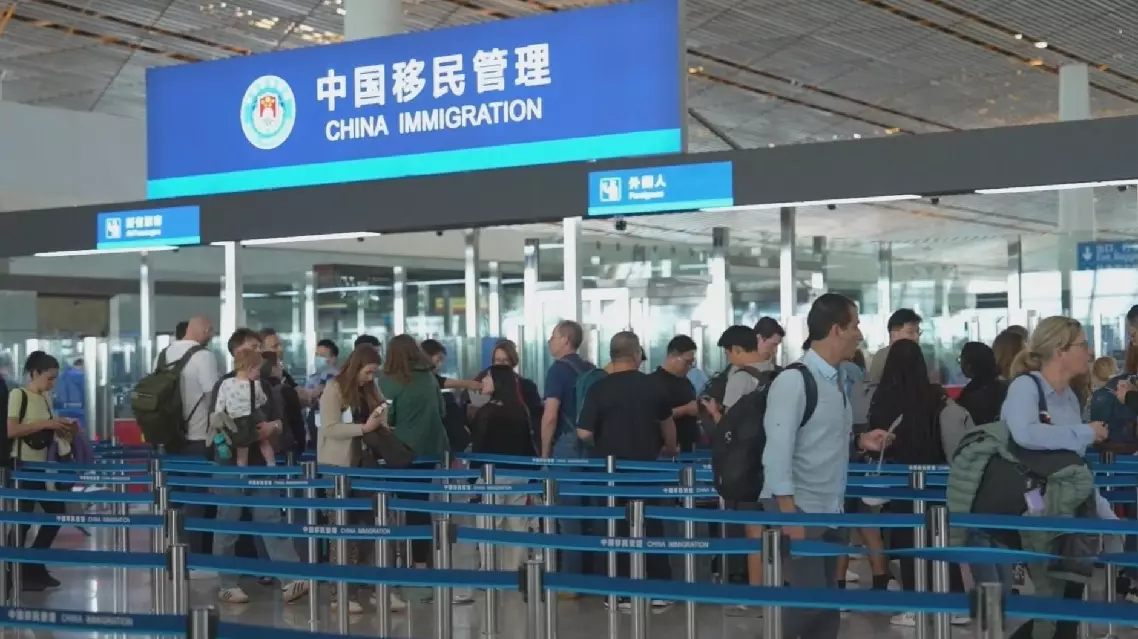
The National Immigration Administration forecasts that China’s border crossings will handle an average of 2.15 million inbound and outbound passenger trips per day during the three-day holiday — a 12.2 percent increase compared to the same period last year.
Ports across the country saw a surge in activity ahead of the holiday. At Horgos Port in northwest China’s Xinjiang Uygur Autonomous Region, cross-border travel is expected to average around 4,000 people per day during the break, marking a noticeable increase compared to previous years.
In southern China, the Guangdong-Hong Kong-Macao Greater Bay Area will host a series of large-scale dragon boat races and cultural events.
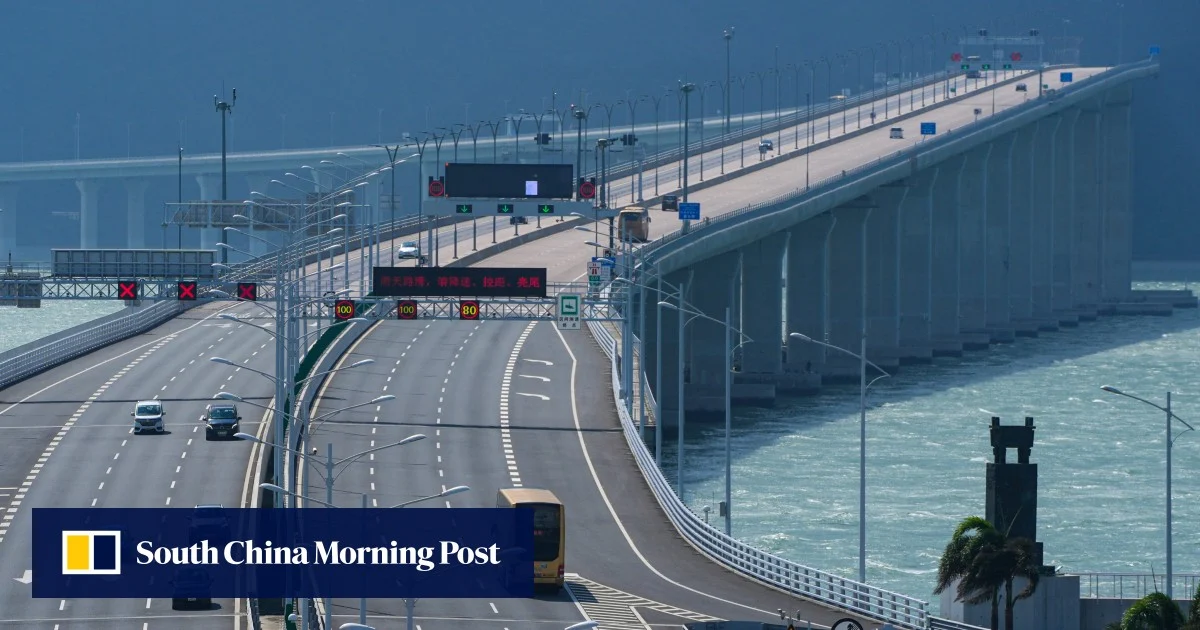
Coinciding with Children’s Day on June 1 and the weekend, this year’s holiday is expected to spur a surge in outbound travel from the Chinese mainland, as well as home visits by Hong Kong and Macao residents. Land border checkpoints between Hong Kong and Shenzhen are projected to experience a notable increase in traffic.
To meet growing demand, immigration authorities have ramped up border clearance support by adding multilingual interpretation services and improving efficiency at checkpoints.
Similar scenes of heightened activity are also expected in Qingdao, in east China’s Shandong Province.
Bian Feng, director of the exit-entry frontier checkpoint at Qingdao Jiaodong International Airport, said, “We anticipate 27,000 border crossings during the Dragon Boat Festival holiday, a 13 percent rise from the same period last year.”
The Dragon Boat Festival, also known as Duanwu Festival, falls on the fifth day of the fifth month in the Chinese lunar calendar. This year, it is being celebrated on Saturday, May 31. During the festival, people take part in traditions such as dragon boat races and eating zongzi (sticky rice dumplings) to honor the patriotic poet Qu Yuan.
China braces for inbound tourism surge over holiday amid policy incentives
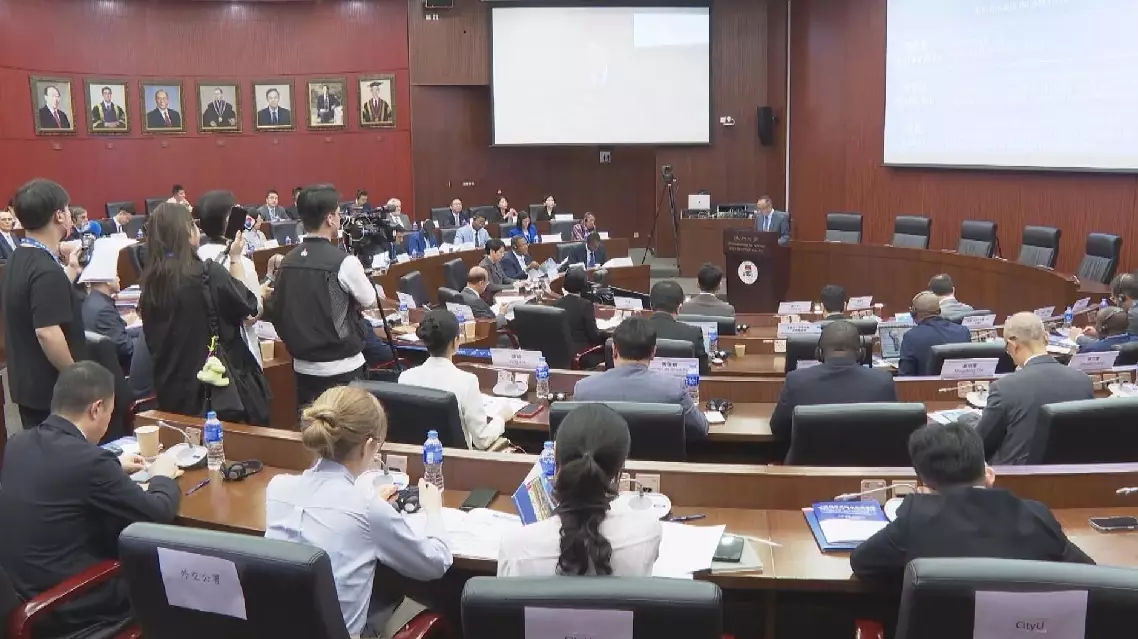
The Forum of Think Tanks between China and Portuguese-speaking countries, jointly organized by the Office of the Commissioner of the Ministry of Foreign Affairs of the People’s Republic of China in the Macao Special Administrative Region (SAR) and the Macao SAR government, was held Thursday at the University of Macao.
The forum brought together experts from the Chinese mainland, the Macao SAR, and eight Portuguese-speaking countries — including Angola, Brazil, and Portugal — to deepen exchanges and build consensus on cooperation.
Participants shared their perspectives on each country’s approach to modernization, exchanged valuable experiences, and discussed future development.
Raimundo Domingos Gonçalves, an analyst at Radio Nacional de Angola (RNA), cited China as an example and emphasized the importance of experience-sharing.
“China’s modernization, I think it is the best in the world. Nowadays, or in terms of geopolitical issues China has been defending what we call a global cooperation so that we can share experience or that we can share in knowledge and know-how, because without know-how we cannot think about the future, and China is not (just) the future. China is always the future,” he said.
Ye Guiping, vice president of the City University of Macao, emphasized that the Chinese path to modernization challenges developing countries’ dependence on Western models.
“The Chinese path to modernization is a new vision that differs from the Western model of modernization. It enriches and develops Marxism and breaks the dependency of other developing countries on Western nations’ modernization models. It signals that the road to modernization is diverse and rich and offers Chinese wisdom and experience to developing countries in the Portuguese-speaking world,” he said.
Speaking on the importance of collaboration in global development, Hu Weixing, dean of the Faculty of Social Sciences at the University of Macao, emphasized the value of mutual learning in the pursuit of modernization.
“The path to modernization for each country is different, but there are things they have in common. Our hope is for everyone to come together, build consensus, and find a path where we can all succeed and grow together, sharing our successful experiences. This is the essence of the concept of mutual learning among civilizations advocated by President Xi Jinping,” said Hu.
Think tank forum between China, Portuguese-speaking countries held in Macao