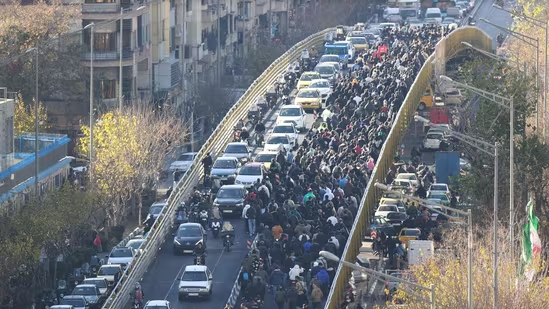
At least seven people have been killed in clashes between security forces and protesters as fresh protests have continued to rock Iran since Sunday. The protests began in the capital, Tehran, and later spread after students from at least ten universities joined the demonstrations on Tuesday.

The protests were sparked by economic stagnation and high inflation, which officially rose to 42.5 per cent in December.
Why massive protests have rocked Iran
The demonstrations began on Sunday when shopkeepers took to the streets over the government’s handling of a sharp fall in the currency, and rising prices.
Merchants, shop owners and students at several Iranian universities have been protesting for days and shutting down key bazaar markets. On Wednesday, the government declared a holiday due to cold weather, effectively shutting much of the country.
Iran’s Fars news agency said buildings were “severely damaged” after protesters threw stones, and that police detained several people described as “ringleaders”.
Notably, Iran’s economy has faced pressure for years due to US and Western sanctions linked to Tehran’s nuclear programme. Regional tensions added to the strain after a 12-day conflict with Israel in June, which further weakened state finances.
Saeed Pourali, a deputy governor in Lorestan province, told the Iranian news agency Student News Network that the protests had emerged due to “economic pressures, inflation and currency fluctuations, and are an expression of livelihood concerns”.
Although driven by economic struggles, the protests have also seen demonstrators raise slogans against Iran’s theocratic system.
Earlier this week, a video showing a person sitting in the middle of a Tehran street and facing motorcycle police went viral on social media. Some compared it to a “Tiananmen moment”, a reference to the image of a lone protester standing up to tanks during the 1989 demonstrations in Beijing.
Sitting cross-legged, the protester appears calm, head lowered, before pulling a jacket over his head as a crowd behind him runs through clouds of tear gas.
The latest protests are smaller than the major unrest in 2022, which followed the death in custody of Mahsa Amini after her arrest for allegedly breaching Iran’s strict dress code for women. Her death led to massive outrage across the country, where several hundred people were killed, including dozens from the security forces.
Iranian government’s response to the protests
Iran’s civilian government, led by President Masoud Pezeshkian, has tried to show a willingness to engage with protesters.
“From an Islamic perspective… if we do not resolve the issue of people’s livelihoods, we will end up in Hell,” he said at an event aired on state television.
However, Pezeshkian has admitted his options are limited as the rial has sharply weakened, with one dollar now valued at around 1.4 million rials.
Iran’s prosecutor general said on Wednesday that peaceful economic protests were valid, but warned that any effort to create insecurity would face a “decisive response”.
With inputs from agencies