
 Reuters
The UN and other aid agencies fear new Israeli registration rules for dozens of international non-governmental organisations (INGOs) risk the collapse of the humanitarian response in the occupied West Bank and Gaza Strip.
INGOs not registered by 31 December face closure of their operations in Israel within 60 days, which the agencies say could severely disrupt healthcare and other life-saving services in Gaza.
Save the Children said its application had not been approved and it was “pursuing all available avenues to have this decision reconsidered”.
Israel’s ministry of diaspora affairs and combating antisemitism said the departure of “rogue organisations” would not affect the delivery of aid.
Fourteen out of the approximately 100 applications have so far been rejected, 21 have been approved, and those remaining are still undergoing review, according to the ministry.
The registration system introduced in March includes several grounds for rejection, including:
- Denying the existence of Israel as a Jewish and democratic state
- Denying the Holocaust or the Hamas-led attacks on Israel on 7 October 2023
- Supporting an armed struggle against Israel by an enemy state or terrorist organisation
- Promoting “delegitimisation campaigns” against Israel
- Calling for a boycott of Israel or committing to participate in one
- Supporting the prosecution of Israeli security forces in foreign or international courts
The Humanitarian Country Team of the Occupied Palestinian Territory – a forum that brings together UN agencies and more than 200 local and international organisations – warned in a statement last Wednesday that the system “fundamentally jeopardises” the operations of INGOs in Gaza and the West Bank.
“The system relies on vague, arbitrary, and highly politicised criteria and imposes requirements that humanitarian organisations cannot meet without violating international legal obligations or compromising core humanitarian principles,” it said.
It added: “While some INGOs have been registered under the new system, these INGOs represent only a fraction of the response in Gaza and are nowhere near the number required just to meet immediate and basic needs.”
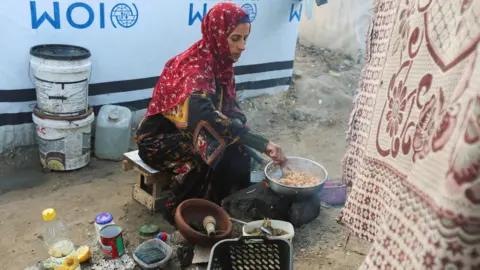
According to the Humanitarian Country Team, INGOs currently run or support the majority of Gaza’s field hospitals and primary healthcare centres, emergency shelter responses, water and sanitation services, nutrition stabilisation centres for children with acute malnutrition, and critical mine action activities.
If they were forced to stop operations, it said, one in three health facilities in Gaza would close.
“Pressing ahead with this policy will have far-reaching consequences on the future of the OPT, in addition to threatening a fragile ceasefire and putting Palestinian lives at imminent risk, particularly during winter,” the Humanitarian Country Team warned.
“The UN will not be able to compensate for the collapse of INGOs’ operations if they are de-registered, and the humanitarian response cannot be replaced by alternative actors operating outside established humanitarian principles.”
It also stressed that Israel had an obligation under international humanitarian law to ensure that Gaza’s population was adequately supplied.
 Reuters
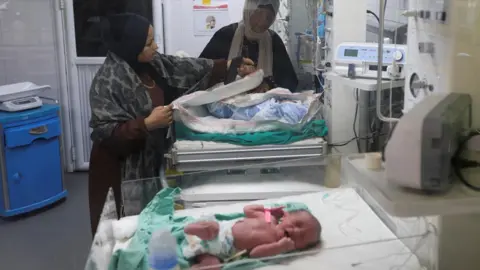
Save the Children – which has supported families in Gaza with clean water and cash assistance, as well as healthcare clinics and mother and baby areas – confirmed on Monday that it was informed several weeks ago that its registration application had not been approved.
“We are pursuing all available avenues to have this decision reconsidered, including filing a petition with the Israeli courts,” a spokesperson told the BBC.
“While we call for this decision to be reconsidered, we remain committed to delivering vital and life-saving support to children and families in the Occupied Palestinian Territory through our team of over 300 dedicated Palestinian staff together with trusted partners.”
Médecins Sans Frontières (MSF) – which supports six public hospitals and runs two field hospitals in Gaza, and has treated hundreds of thousands of patients over the past year – meanwhile said it was among the INGOs still waiting to obtain registration.
“With Gaza’s health system already destroyed, independent and experienced humanitarian organisations losing access to respond would be a disaster for Palestinians,” a statement said.
“MSF calls on the Israeli authorities to ensure that INGOs can maintain and continue their impartial and independent response in Gaza. The already restricted humanitarian response cannot be further dismantled.”
A spokesman for the Israeli diaspora affairs ministry told the BBC that it had already extended the registration deadline from 9 September to 31 December “as an extraordinary measure and well beyond what was required”.
“There has been more than sufficient time to act, and any organisation that has failed to do so by now has demonstrated a clear lack of good faith,” he said.
He also stressed that the process had been carried out by a team that included all relevant Israeli security and government bodies, and that “claims of a sweeping or mass rejection are false and misleading”.
He added: “Humanitarian aid will continue uninterrupted. The departure of rogue organisations whose real objective is to undermine the State of Israel under a humanitarian guise will not affect the ongoing delivery of aid.”