Editor’s note: Editor’s note: Vladimir Bekish is a Russian military-political analyst and an expert in strategic security, with a focus on the Middle East and Africa. The article reflects the author’s personal views and may not represent the position of News.Az.
A major political and strategic document has just been published in the United States — one that outlines not only the future trajectory of America’s development and global influence but also the way the rest of the world is expected to be shaped in the coming years, decades, and even centuries. This is the updated U.S. National Security Strategy.
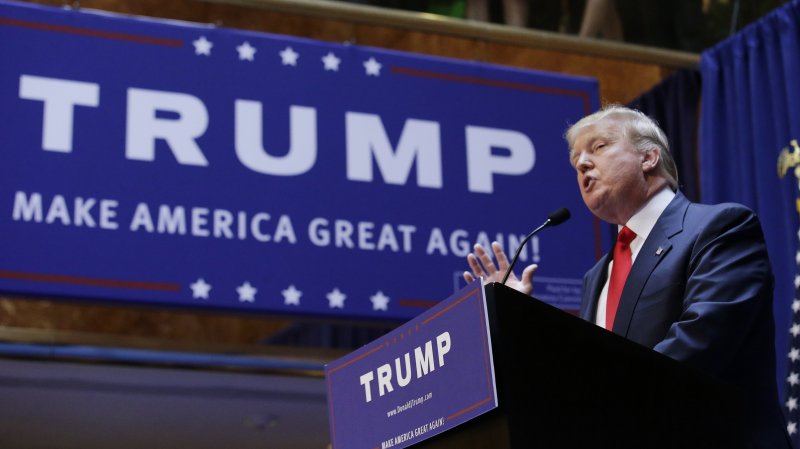
From the outset, the formal purpose of this Strategy is clear: to announce and initiate steps intended to “Make America Great Again” and restore the nation’s position as the world’s number one power.
In the new Strategy, this ambition is articulated as follows:
“This document is a roadmap designed to ensure that America remains the greatest and most successful nation in the history of humankind and a bastion of freedom on Earth.”
There is nothing surprising in this aspiration; any American would welcome such a goal. It is also logical to assume that citizens of other countries would feel the same if their nation achieved similar preeminence.
However, Trump seems fully aware that other countries may harbour similar ambitions. This is why the Strategy immediately asserts global hierarchy with the following declaration:
“All nations face a simple choice: to live in a world of sovereign states and free economies led by America, or to inhabit a parallel reality shaped by powers on the other side of the world.”
 Photo: AP
There it is: everyone is expected to live in a world led by America, not anyone else. And if some dare to imagine an alternative global leader, for instance, fast-growing, market-expanding China, the Strategy offers a clear explanation of how Washington views the world:
“President Trump has single-handedly overturned more than 30 years of mistaken American assumptions about China — namely, that by opening U.S. markets to China, encouraging American businesses to invest in the PRC and relocate production there, we would integrate China into the so-called ‘rules-based order.’ This did not happen.”
Naturally, Beijing will study this Strategy closely, particularly the sections concerning China. To ensure there is no misunderstanding, Trump sends unambiguous signals:
“Deterring conflict over Taiwan, ideally by maintaining military superiority, is our priority. We will also uphold our long-standing declared position on Taiwan, namely: the United States does not support unilateral changes to the status quo in the Taiwan Strait.”
Across the Strategy’s 33 pages, many passages stand out — both in terms of America’s vision for itself and expectations for the world. For example, the Western Hemisphere receives its own roadmap:
“After years of neglect, the United States will once again proclaim and implement the Monroe Doctrine to restore American preeminence in the Western Hemisphere, defend our homeland, and ensure access to key locations across the region. We will not allow competitors external to the Hemisphere to deploy forces or other threatening instruments here, or to own or control strategically significant assets.”
The message is clear: American preeminence. For those in China, Russia, or Iran attempting to influence Venezuela, Chile, or Brazil — back off.
Further clarity is offered:
“In the Western Hemisphere, as everywhere else, the United States must clearly state that American goods, services, and technologies are far more advantageous in the long run: they are of higher quality and do not come with the same ‘conditions’ as assistance from other countries.”
The Strategy contains statements that provoke questions, surprise, and even occasional amusement. After reading it, the impression emerges that the primary goal is less about implementing a detailed roadmap for America’s elevation and more about proclaiming the uniqueness and genius of Donald Trump while diminishing other presidents. Consider this excerpt:
“After four years of weakness, radicalism, and deadly failures, my administration acted swiftly and unprecedentedly to restore America’s strength at home and abroad and to bring peace and stability to the entire world. No administration in history has achieved such a dramatic reversal in such a short time.”
The message is unmistakable: Biden’s presidency was a failure, unlike Trump’s.
Another example:
“During President Trump’s first term, he and his team mobilized America’s extraordinary strengths to correct course and begin opening a new golden era for our nation. Continuing on this path is the chief mission of President Trump’s second term and of this document.”
The Middle East also receives attention:
“President Trump’s ability to unite the Arab world in Sharm el-Sheikh for peace and normalization will allow the United States, at last, to prioritize its own interests.”
In other words, no one before him managed to reconcile the Middle East — only President Trump.
Further passages reinforce this portrayal:
“President Trump uses unconventional diplomacy, U.S. military strength, and economic pressure to extinguish sparks of hostility between nuclear-armed states and bloody wars fueled by centuries-old hatred.”
“President Trump has earned a reputation as the President of Peace. In addition to the remarkable achievement of his first term — the historic Abraham Accords — during his second term President Trump used his negotiating skills to achieve unprecedented peace in eight conflicts worldwide in just eight months.”
 Photo: Getty Images
These statements reveal the document’s tone and intent. If you read the Strategy in full, many similar passages appear.
Regarding this “unprecedented peace in eight conflicts,” one supposedly resolved conflict is the confrontation between Thailand and Cambodia, which the Strategy claims was ended by Trump. Meanwhile, today’s news reports ongoing strikes, civilian evacuations, and casualties among soldiers and non-combatants.
And one can only wonder: what is happening there? Can’t they read? After all, according to the Strategy, the President of Peace has already ended their war!
(If you possess specialized knowledge and wish to contribute, please reach out to us at opinions@news.az).